Our projects
Coastal Stressors and Responses
From endocrine disruption to ocean acidification, how stressors are impacting coastal species.
Key Findings:
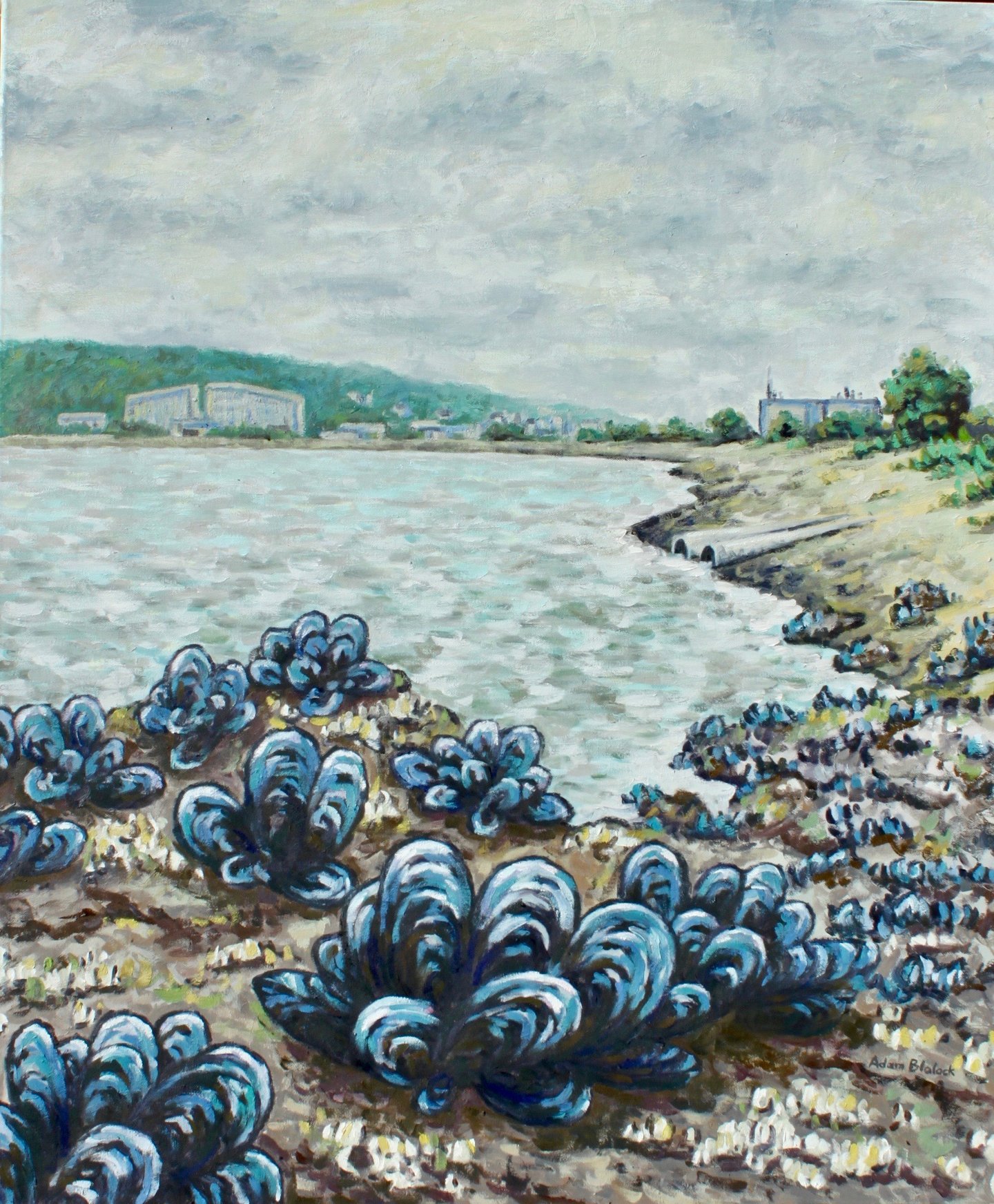
Blue mussels experience and are susceptible to multiple stressors from pollutants to parasites (42, 19, 56) . Our work has shown that vertebrate endocrine disruptors cause sex reversal in mollusks (58) and we developed a preliminary Adverse Outcome Pathway (AOP) to describe the potential mechanism (31).
Coastal and marine species must face the combined impacts of temperature and ocean acidification. We have investigated the molecular implications of these dual stressors in lobsters (59) and the soft-shell clam (in review).
Pollution helps to facilitate the success of marine invaders. We have studied the impacts of invasive species on native coastal species (28) and the role pollution plays in aiding invasion success (38).
Biodiversity and Evolution in Degraded Ecosystems
Agriculture and mining disturb natural ecosystems leading to biodiversity loss while some species adapt.
Key Findings:
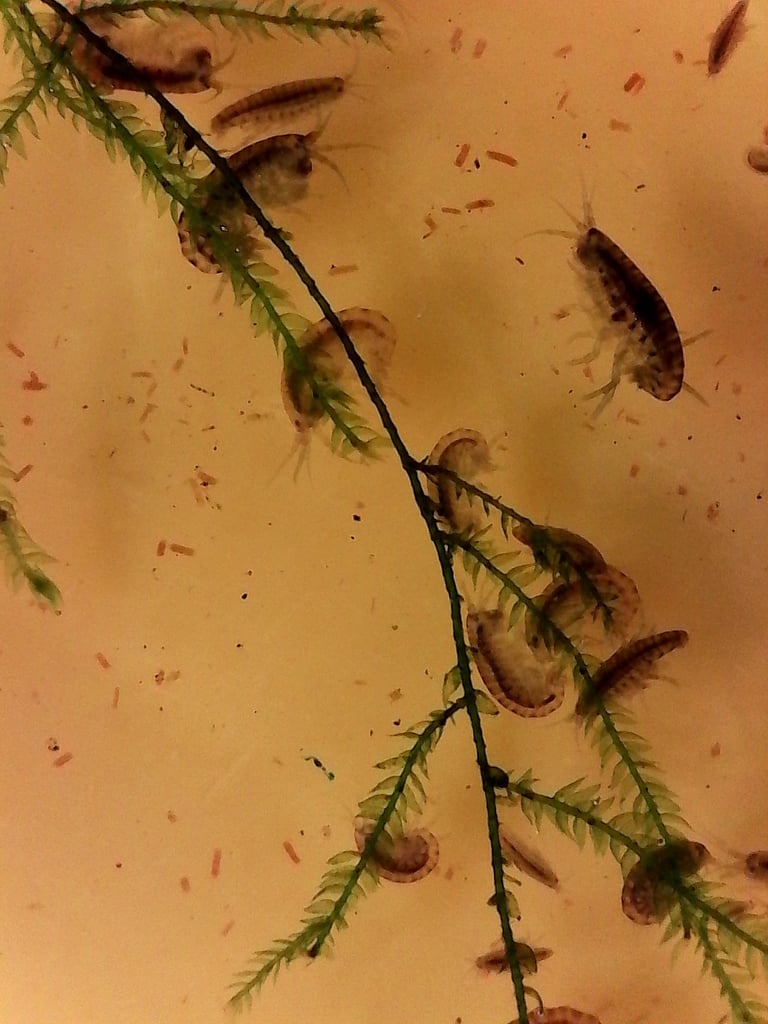
Hyalella azteca, a freshwater amphipod and model species for evolutionary toxicology (29), has evolved resistance to multiple classes of insecticides from California (18, 30, 37, 44) to New England (53). Resistance has evolved independently (18, 45), multiple times across the species complex of H. azteca (53), but is rare in other arthropods collected from the same water bodies (62).
H. azteca has also evolved resistance to metals in mining impacted areas through gene duplication of metallothionein, a gene involved in metal sequestration (in prep).
While evolution of resistance allows H. azteca to withstand strong selective pressures, it comes with fitness costs (25, 46), and facilitates trophic transfer of pollutants to fish (49, 50).
Evolution to pollution may be rapid and common when species face high selective pressures and they have the adaptive capacity to evolve higher tolerance. Ecological Risk Assessment must consider the implications of evolution and how this influences ecological health and our assessment of impacts (40).
Molecular Solutions
Detection tools and New Approach Methodologies (NAMs) for toxicity assessment.
Key Findings:
Transcriptomic profiles are capable of identifying and characterizing contaminant exposures in the field (6), first illustrated with our work on Daphnia magna exposed to mine tailings effluent (7).
We have expanded this work to include multiple proof-of-principle field studies in Atlantic blue mussels (42), Mediterranean mussels (54), Hyalella azteca (26), and earthworms (43).
We have also developed molecular tools to non-invasively (using hemolymph) determine the presence of parasites (56) in blue mussels and determine their sex (58).
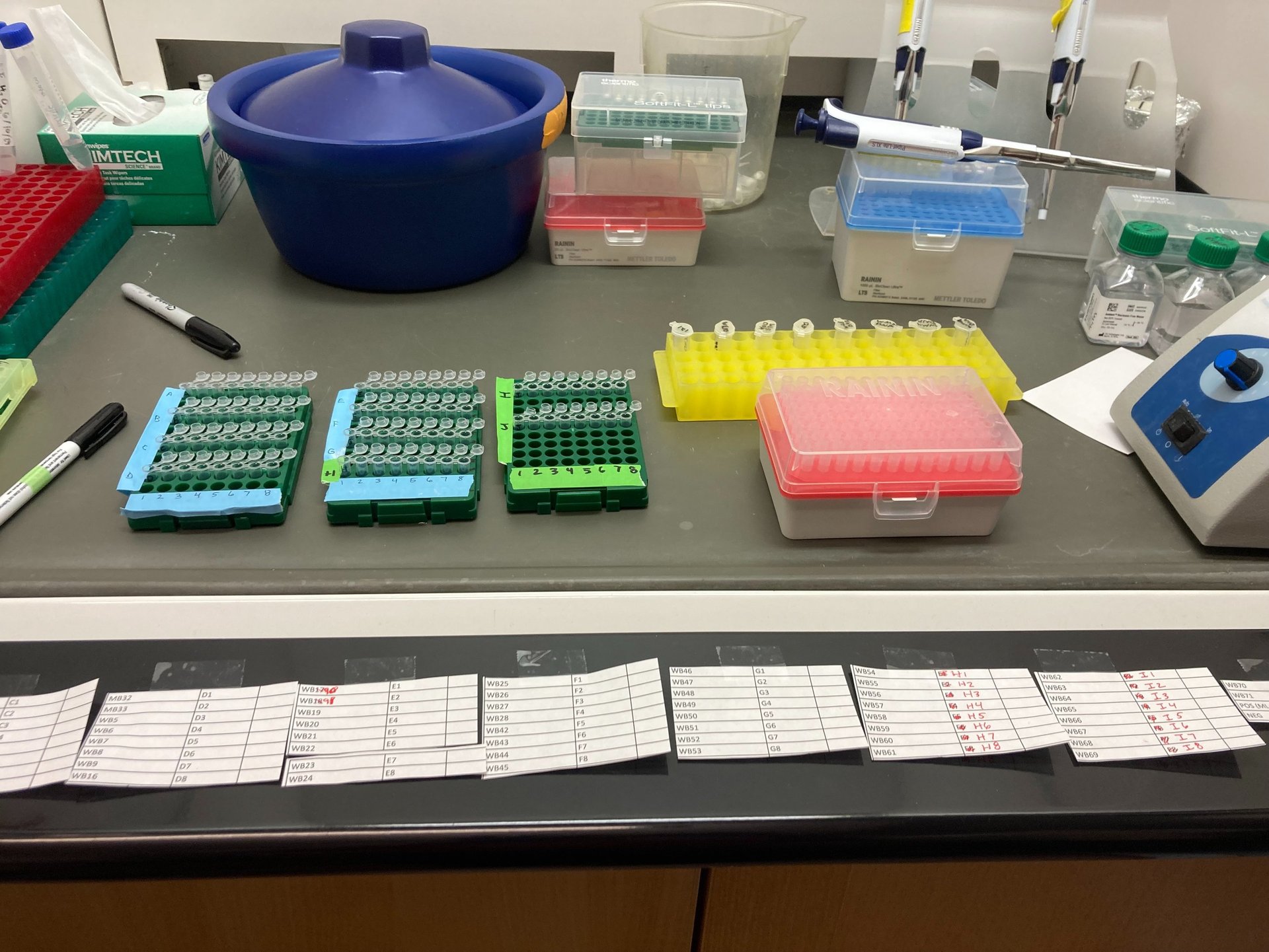
We are now developing a New Approach Methodology (NAM) for developmental toxicity using the non-vertebrate model H. azteca called the Crustacean Embryo Test (CET). Preliminary results show that this assay performs similarly to the well established zebrafish embryo test (ZET) (in prep).
Community Based Participatory Research
Empowering communities to protect their environment.
Key Findings:
CBPR is an approach to environmental health research that places the community at the heart of project decisions and treats community members as experts of their lived experiences and contaminant exposures.
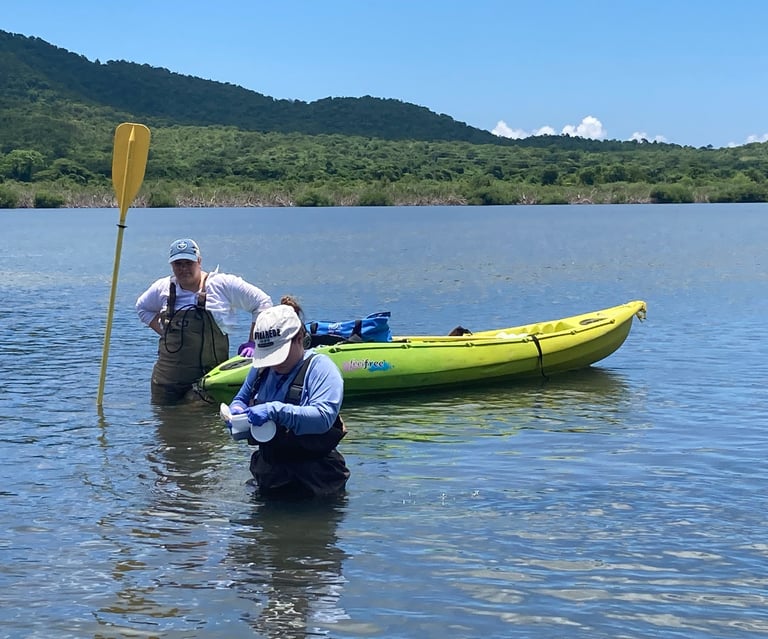
This project is based in Vieques, Puerto Rico, an island municipality that experienced 60 years of military occupation by the US Navy. The US Navy left Vieques in 2003, but also left a legacy of contamination resulting in health disparities. Our work aims to repair past distrust of science by actively involving community members in our work as members of our steering committee and participants in citizen science (57).
Our research group leads the ecological risk portion of this project, which is one of the first ecotoxicology studies of its kind to employ a CBPR approach. Using community knowledge and participation, we have found toxicity where past studies have not (in prep). Using genomic tools we are uncovering the causes of this toxicity (in prep).
Connect
Get in touch to learn more.
helen.poynton@umb.edu
© 2025. All rights reserved.